Family: Hesperiidae
Subfamily: Pyrginae
Identification: Wings are brown-black; hindwing is lobed. Forewing has transparent gold spots; underside of hindwing has a metallic silver band.
Wing Span: 1 3/4 - 2 5/8 inches (4.5 - 6.7 cm).
Life History: Adults perch upside down under leaves at night and on hot or cloudy days. To seek females males perch on branches and tall weeds, and occasionally patrol. Females lay single eggs near the host trees, and the caterpillars must find their proper host. Young caterpillars live in a folded leaf shelter; older ones live in a nest of silked-together leaves. Chrysalids hibernate.
Flight: Two broods from May-September in most of the East, a single brood to the north and west, three-four broods from February-December in the Deep South.
Caterpillar Hosts: Many woody legumes including black locust (Robinia pseudacacia), honey locust (Gleditsia triacanthos) and false indigo (Amorpha species). Also selected herbaceous legumes such s Glycyrrhiza species.
Adult Food: The Silver-spotted Skipper almost never visits yellow flowers but favors blue, red, pink, purple, and sometimes white and cream-colored ones. These include everlasting pea, common milkweed, red clover, buttonbush, blazing star, and thistles.
Habitat: Disturbed and open woods, foothill streamcourses, prairie waterways.
Range: Extreme southern Canada and most of the continental United States except the Great Basin and west Texas; northern Mexico.
Conservation: Not usually required.Silver-spotted Skipper
Epargyreus clarus
Observation date: July 16, 2016
Submitted by: tom nolan
Specimen type: Photograph
Observation notes: In field of tall grass and flowers next to trail
Status: Resident
Verified by: Will Kerling
Verified date: October 17, 2016
Coordinator notes: excellent image!
Checklist region(s): United States, New Jersey, Burlington CountySilver-spotted Skipper
Epargyreus clarus
Observation date: July 31, 2016
Submitted by: copasetick
Specimen type: Photograph
Observation notes: humid,cloudy about 75 deg.
Status: Resident
Verified by: PDeGennaro
Verified date: July 31, 2016
Coordinator notes: None.
Checklist region(s): United States, ConnecticutFamily: Hesperiidae
Subfamily: Pyrginae
Identification: Hindwing is lobed. Upperside is black-brown with 3 square white spots. Underside of hindwing is brown with a blue sheen and a black spot near the base.
Wing Span: 1 11/16 - 2 5/16 inches (4.3 - 5.9 cm).
Life History: When inactive, adults rest upside down on the underside of leaves. They are most active on sunny days, but fly mostly in the shade.
Flight: Several flights from May-September in the Southwest, many flights all year in southern Florida. A rare stray from Mexico into South Texas.
Caterpillar Hosts: In Florida, Jamaican dogwood (Piscidia piscipula) and karum tree (Pongamia pinnata); other legumes elsewhere.
Adult Food: Flower nectar.
Habitat: Openings and trails in hardwood hammocks in Florida, near small permanent streams in Arizona, subtropical woods in South Texas.
Range: Argentina north through Central America and Mexico to the West Indies and southern Florida. Strays to Texas and the Southwest.
Conservation: Hardwood hammocks in Florida should be conserved.
NCGR: G5 - Demonstrably secure globally, though it may be quite rare in parts of its range, especially at the periphery.
Management Needs: None reported.
Comments: NULLFamily: Hesperiidae
Subfamily: Pyrginae
Identification: Wings are chestnut brown. Forewing has pale spots that are all about the same size. Underside of hindwing has a blurry rectangular silver patch.
Wing Span: 1 7/8 - 2 3/16 inches (3.8 - 5.6 cm).
Life History: Adults rest on the underside of leaves.
Flight: April, June, and August-November in South Texas; December-January in Mexico.
Caterpillar Hosts: Legumes including Bauhinia.
Adult Food: Flower nectar.
Habitat: Tropical scrub and nearby openings and edges.
Range: Argentina north through Central America and Mexico to the West Indies. Strays to the lower Rio Grande Valley, Texas and rarely to southeastern Arizona.
Conservation: Not necessary for a rare stray.
NCGR: G5 - Demonstrably secure globally, though it may be quite rare in parts of its range, especially at the periphery.
Management Needs: None reported.
Comments: NULL
as defined in the bible in man is not a mere passive quality, but the deliberate preference of right to wrong, the firm and persistent resistance of all moral evil, and the choosing and following of all moral good.
Dictionary definition of goodness:
The quality of being good in any of its various senses; excellence; virtue; kindness; benevolence; as, the goodness of timber, of a soil, of food; goodness of character, of disposition, of conduct, etc.
What does goodness mean to me?
People can have good traits or do good things, but goodness is not in our character. Our goodness comes from God. God's goodness is shown to us right from the beginning when he created everything. For example, "God saw all that he had made, and it was very good." (Genesis 1:31) Everyone know the lyrics of the song that says "“God is so good; He’s so good to me.†We can all feel free to sing this song because God is good to us in such a personal way. He knows what we need and He shows his goodness to us. We look up to God as He teaches us what true goodness is. Without His guidance we wouldn't be good, we would be evil. God wants us to be good. That's why He offered us salvation through his son Jesus Christ.
The Goodness of a Christian:
We should seek to be FULL of it.
We have to make sure we DO it – not just HAVE IT.
Goodness begins right here, in our little church.
Goodness extends to your enemies.
Anything other than doing good, is a sin. If you know what you are supposed to do, and yet won't do it, your NOT doing it has become a BIG sin!
Goodness in your life actually enables you to live long, and enjoy living long.
I believe that goodness and mercy will be with me the rest of my life because I believe in the Lord and His beliefs. He made me good and He keeps me away from evil. I have never really been a bad person. I have never done bad things. I've never been arrested. I've never been in jail. Basically I've been a good girl. But as you know, everyone is born into sin because of what Eve did so God saved me and gave me his goodness which I was very happy to accept.
I hope you were encouraged by my comments. I pray that your life is also filled with goodness. God Bless You!



Page 14 of tatntole's Comments
Back to tatntole's profile
APDG ~ Butterflies on flowers🌸Ƹ̵̡Ӝ̵̨̄Ʒ
Hey, enjoy the pics I have chose for you and have fun!
APDG~Quick Swap #4,Special Day,Independence Day
My wish for you
Something to whet your appitite
So let's celebrate.
Have a safe and happy 4th of July.
APDG- Butterflies on Flowers!
APDG ~ Butterflies on flowers, from wm


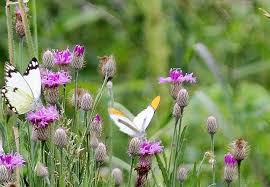

Hey, I'm decorating your profile for APDG ~ Butterflies on flowers 🌸 Ƹ̵̡Ӝ̵̨̄Ʒ
We hope you'll enjoy our selection.
Kindest regards, -A.
BL ~ Butterflies from our State or Country
Family: Hesperiidae Subfamily: Pyrginae Identification: Wings are brown-black; hindwing is lobed. Forewing has transparent gold spots; underside of hindwing has a metallic silver band. Wing Span: 1 3/4 - 2 5/8 inches (4.5 - 6.7 cm). Life History: Adults perch upside down under leaves at night and on hot or cloudy days. To seek females males perch on branches and tall weeds, and occasionally patrol. Females lay single eggs near the host trees, and the caterpillars must find their proper host. Young caterpillars live in a folded leaf shelter; older ones live in a nest of silked-together leaves. Chrysalids hibernate. Flight: Two broods from May-September in most of the East, a single brood to the north and west, three-four broods from February-December in the Deep South. Caterpillar Hosts: Many woody legumes including black locust (Robinia pseudacacia), honey locust (Gleditsia triacanthos) and false indigo (Amorpha species). Also selected herbaceous legumes such s Glycyrrhiza species. Adult Food: The Silver-spotted Skipper almost never visits yellow flowers but favors blue, red, pink, purple, and sometimes white and cream-colored ones. These include everlasting pea, common milkweed, red clover, buttonbush, blazing star, and thistles. Habitat: Disturbed and open woods, foothill streamcourses, prairie waterways. Range: Extreme southern Canada and most of the continental United States except the Great Basin and west Texas; northern Mexico. Conservation: Not usually required.
 Silver-spotted Skipper
Epargyreus clarus
Silver-spotted Skipper
Epargyreus clarus
Observation date: July 16, 2016 Submitted by: tom nolan Specimen type: Photograph Observation notes: In field of tall grass and flowers next to trail Status: Resident Verified by: Will Kerling Verified date: October 17, 2016 Coordinator notes: excellent image! Checklist region(s): United States, New Jersey, Burlington County Silver-spotted Skipper
Epargyreus clarus
Silver-spotted Skipper
Epargyreus clarus
Observation date: July 31, 2016 Submitted by: copasetick Specimen type: Photograph Observation notes: humid,cloudy about 75 deg. Status: Resident Verified by: PDeGennaro Verified date: July 31, 2016 Coordinator notes: None. Checklist region(s): United States, Connecticut Family: Hesperiidae
Subfamily: Pyrginae
Identification: Hindwing is lobed. Upperside is black-brown with 3 square white spots. Underside of hindwing is brown with a blue sheen and a black spot near the base.
Wing Span: 1 11/16 - 2 5/16 inches (4.3 - 5.9 cm).
Life History: When inactive, adults rest upside down on the underside of leaves. They are most active on sunny days, but fly mostly in the shade.
Flight: Several flights from May-September in the Southwest, many flights all year in southern Florida. A rare stray from Mexico into South Texas.
Caterpillar Hosts: In Florida, Jamaican dogwood (Piscidia piscipula) and karum tree (Pongamia pinnata); other legumes elsewhere.
Adult Food: Flower nectar.
Habitat: Openings and trails in hardwood hammocks in Florida, near small permanent streams in Arizona, subtropical woods in South Texas.
Range: Argentina north through Central America and Mexico to the West Indies and southern Florida. Strays to Texas and the Southwest.
Conservation: Hardwood hammocks in Florida should be conserved.
NCGR: G5 - Demonstrably secure globally, though it may be quite rare in parts of its range, especially at the periphery.
Management Needs: None reported.
Comments: NULL
Family: Hesperiidae
Subfamily: Pyrginae
Identification: Hindwing is lobed. Upperside is black-brown with 3 square white spots. Underside of hindwing is brown with a blue sheen and a black spot near the base.
Wing Span: 1 11/16 - 2 5/16 inches (4.3 - 5.9 cm).
Life History: When inactive, adults rest upside down on the underside of leaves. They are most active on sunny days, but fly mostly in the shade.
Flight: Several flights from May-September in the Southwest, many flights all year in southern Florida. A rare stray from Mexico into South Texas.
Caterpillar Hosts: In Florida, Jamaican dogwood (Piscidia piscipula) and karum tree (Pongamia pinnata); other legumes elsewhere.
Adult Food: Flower nectar.
Habitat: Openings and trails in hardwood hammocks in Florida, near small permanent streams in Arizona, subtropical woods in South Texas.
Range: Argentina north through Central America and Mexico to the West Indies and southern Florida. Strays to Texas and the Southwest.
Conservation: Hardwood hammocks in Florida should be conserved.
NCGR: G5 - Demonstrably secure globally, though it may be quite rare in parts of its range, especially at the periphery.
Management Needs: None reported.
Comments: NULL Family: Hesperiidae
Subfamily: Pyrginae
Identification: Wings are chestnut brown. Forewing has pale spots that are all about the same size. Underside of hindwing has a blurry rectangular silver patch.
Wing Span: 1 7/8 - 2 3/16 inches (3.8 - 5.6 cm).
Life History: Adults rest on the underside of leaves.
Flight: April, June, and August-November in South Texas; December-January in Mexico.
Caterpillar Hosts: Legumes including Bauhinia.
Adult Food: Flower nectar.
Habitat: Tropical scrub and nearby openings and edges.
Range: Argentina north through Central America and Mexico to the West Indies. Strays to the lower Rio Grande Valley, Texas and rarely to southeastern Arizona.
Conservation: Not necessary for a rare stray.
NCGR: G5 - Demonstrably secure globally, though it may be quite rare in parts of its range, especially at the periphery.
Management Needs: None reported.
Comments: NULL
Family: Hesperiidae
Subfamily: Pyrginae
Identification: Wings are chestnut brown. Forewing has pale spots that are all about the same size. Underside of hindwing has a blurry rectangular silver patch.
Wing Span: 1 7/8 - 2 3/16 inches (3.8 - 5.6 cm).
Life History: Adults rest on the underside of leaves.
Flight: April, June, and August-November in South Texas; December-January in Mexico.
Caterpillar Hosts: Legumes including Bauhinia.
Adult Food: Flower nectar.
Habitat: Tropical scrub and nearby openings and edges.
Range: Argentina north through Central America and Mexico to the West Indies. Strays to the lower Rio Grande Valley, Texas and rarely to southeastern Arizona.
Conservation: Not necessary for a rare stray.
NCGR: G5 - Demonstrably secure globally, though it may be quite rare in parts of its range, especially at the periphery.
Management Needs: None reported.
Comments: NULL
EF~DisneyMovie Series #1 - Pandas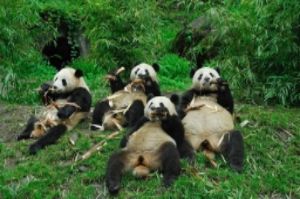



 I hope you like these Pandas
EF~DisneyNature Movie Series #1 - Pandas Mail Deadline: May 31, 2017
Hello, I hope you enjoy the pics I chose for this swap have a great weekend
Oh Dear, pandas are so adorable!!
EF- DisneyNature Movie Series #1- PANDAS
I love pandas! They look so cute and cuddly! Cute doxie, BTW!
CSG ~ Fruit of the Spirit, #5 Goodness
Goodness
as defined in the bible in man is not a mere passive quality, but the deliberate preference of right to wrong, the firm and persistent resistance of all moral evil, and the choosing and following of all moral good.
Dictionary definition of goodness: The quality of being good in any of its various senses; excellence; virtue; kindness; benevolence; as, the goodness of timber, of a soil, of food; goodness of character, of disposition, of conduct, etc.
What does goodness mean to me?
People can have good traits or do good things, but goodness is not in our character. Our goodness comes from God. God's goodness is shown to us right from the beginning when he created everything. For example, "God saw all that he had made, and it was very good." (Genesis 1:31) Everyone know the lyrics of the song that says "“God is so good; He’s so good to me.†We can all feel free to sing this song because God is good to us in such a personal way. He knows what we need and He shows his goodness to us. We look up to God as He teaches us what true goodness is. Without His guidance we wouldn't be good, we would be evil. God wants us to be good. That's why He offered us salvation through his son Jesus Christ.
The Goodness of a Christian:
We should seek to be FULL of it.
We have to make sure we DO it – not just HAVE IT.
Goodness begins right here, in our little church.
Goodness extends to your enemies.
Anything other than doing good, is a sin. If you know what you are supposed to do, and yet won't do it, your NOT doing it has become a BIG sin!
Goodness in your life actually enables you to live long, and enjoy living long.
I believe that goodness and mercy will be with me the rest of my life because I believe in the Lord and His beliefs. He made me good and He keeps me away from evil. I have never really been a bad person. I have never done bad things. I've never been arrested. I've never been in jail. Basically I've been a good girl. But as you know, everyone is born into sin because of what Eve did so God saved me and gave me his goodness which I was very happy to accept.
I hope you were encouraged by my comments. I pray that your life is also filled with goodness. God Bless You!
Blessings,
Yvonne