I hope you like the pics that I have selected for you! Unfortunately I am allergic to lavender. Even so, I thought this would be a fun swap.
Lavandula (common name lavender) is a genus of 47 known species of flowering plants in the mint family, Lamiaceae. It is native to the Old World and is found from Cape Verde and the Canary Islands, Europe across to northern and eastern Africa, the Mediterranean, southwest Asia to southeast India. Many members of the genus are cultivated extensively in temperate climates as ornamental plants for garden and landscape use, for use as culinary herbs, and also commercially for the extraction of essential oils. The most widely cultivated species, Lavandula angustifolia, is often referred to as lavender, and there is a color named for the shade of the flowers of this species.
The genus includes annual or short-lived herbaceous perennial plants, and shrub-like perennials, subshrubs or small shrubs.
Leaf shape is diverse across the genus. They are simple in some commonly cultivated species; in other species they are pinnately toothed, or pinnate, sometimes multiple pinnate and dissected. In most species the leaves are covered in fine hairs or indumentum, which normally contain the essential oils.
Flowers are borne in whorls, held on spikes rising above the foliage, the spikes being branched in some species. Some species produce colored bracts at the apices. The flowers may be blue, violet or lilac in the wild species, occasionally blackish purple or yellowish. The calyx is tubular. The corolla is also tubular, usually with five lobes (the upper lip often cleft, and the lower lip has two clefts).
L. stoechas, L. pedunculata and L. dentata were known in Roman times. From the Middle Ages onwards, the European species were considered two separate groups or genera, Stoechas (L. stoechas, L. pedunculata, L. dentata) and Lavandula (L. spica and L. latifolia), until Linnaeus combined them. He only recognised five species in Species Plantarum (1753), L. multifida and L. dentata (Spain) and L. stoechas and L. spica from Southern Europe. L. pedunculata was included within L. stoechas.
One of the first modern major classifications was that of Dorothy Chaytor in 1937 at Kew. The six sections she proposed for 28 species still left many intermediates that could not easily be assigned. Her sections included Stoechas, Spica, Subnudae, Pterostoechas, Chaetostachys and Dentatae. However all the major cultivated and commercial forms resided in the Stoechas and Spica sections. There were four species within Stoechas (Lavandula stoechas, L. dentata, L. viridis and L. pedunculata) while Spica had three (L. officinalis (now L. angustifolia), L. latifolia and L. lanata). She believed that the garden varieties were hybrids between true lavender L. angustifolia and spike lavender (L. latifolia).
More recently, work has been done by Upson and Andrews, and currently Lavandula is considered to have three subgenera.
Subgenus Lavandula is mainly of woody shrubs with entire leaves. It contains the principal species grown as ornamental plants and for oils. They are found across the Mediterranean region to northeast Africa and western Arabia.
Subgenus Fabricia consists of shrubs and herbs, and it has a wide distribution from the Atlantic to India. It contains some ornamental plants.
Subgenus Sabaudia constitutes two species in the southwest Arabian peninsula and Eritrea, which are rather distinct from the other species, and are sometimes placed in their own genus Sabaudia.
In addition, there are numerous hybrids and cultivars in commercial and horticultural usage.
The English word lavender is generally thought to be derived from Old French lavandre, ultimately from the Latin lavare (to wash), referring to the use of infusions of the plants.[6] The botanic name Lavandula as used by Linnaeus is considered to be derived from this and other European vernacular names for the plants. However it is suggested that this explanation may be apocryphal, and that the name may actually be derived from Latin livere, "blueish".
The names widely used for some of the species, "English lavender", "French lavender" and "Spanish lavender" are all imprecisely applied. "English lavender" is commonly used for L. angustifolia, though some references say the proper term is "Old English Lavender". The name "French lavender" may be used to refer to either L. stoechas or to L. dentata. "Spanish lavender" may be used to refer to L. stoechas, L. lanata or L. dentata.
A bee on a lavender flower
The most common form in cultivation is the common or English lavender Lavandula angustifolia (formerly named L. officinalis). A wide range of cultivars can be found. Other commonly grown ornamental species are L. stoechas, L. dentata, and L. multifida (Egyptian lavender).
Because the cultivated forms are planted in gardens worldwide, they are occasionally found growing wild as garden escapes, well beyond their natural range. Commonly such adventitious establishment is apparently harmless at best, but in some cases Lavandula species have become invasive. For example, in Australia, Lavandula stoechas has become a cause for concern; it occurs widely throughout the continent, and has been declared a noxious weed in Victoria since 1920. It also is regarded as a weed in parts of Spain.
Lavenders flourish best in dry, well-drained, sandy or gravelly soils in full sun. All types need little or no fertilizer and good air circulation. In areas of high humidity, root rot due to fungus infection can be a problem. Organic mulches can trap moisture around the plants' bases, encouraging root rot. Gravelly materials such as crushed rocks give better results.
Lavender oil
Commercially, the plant is grown mainly for the production of essential oil of lavender. This has antiseptic and anti-inflammatory properties, and can be used as a natural mosquito repellent. These extracts are also used as fragrances for bath products.
English lavender (Lavandula angustifolia) yields an essential oil with sweet overtones, and can be used in balms, salves, perfumes, cosmetics, and topical applications. Lavandin, Lavandula × intermedia (also known as Dutch lavender), yields a similar essential oil, but with higher levels of terpenes including camphor, which add a sharper overtone to the fragrance.
The lavandins Lavandula × intermedia are a class of hybrids of L. angustifolia and L. latifolia. The lavandins are widely cultivated for commercial use, since their flowers tend to be bigger than those of English lavender and the plants tend to be easier to harvest, but lavandin oil is regarded by some to be of a lower quality than that of English lavender, with a perfume less sweet.
Lavender infused cupcakes
Lavender is grown as a condiment and used in salads and dressings. The flowers yield abundant nectar, from which bees make a high-quality honey. Monofloral honey is produced primarily around the Mediterranean, and is marketed worldwide as a premium product. Flowers can be candied and are sometimes used as cake decorations. It is also used to make "lavender sugar."
Lavender lends a floral and slightly sweet flavor to most dishes, and is sometimes paired with sheep's-milk and goat's-milk cheeses. Lavender flowers are occasionally blended with black, green, or herbal teas. Lavender flavors baked goods and desserts, pairing especially well with chocolate. In the United States, both lavender syrup and dried lavender buds are used to make lavender scones and marshmallows.
Though it has many other traditional uses in southern France, lavender is not used in traditional southern French cooking. It does not appear at all in the best-known compendium of Provençal cooking, J.-B. Reboul's Cuisinière Provençale. In the 1970s, a blend of herbs called herbes de Provence which usually includes lavender was invented by spice wholesalers, and lavender has more recently become popular in cooking.
For most cooking applications the dried buds, which are also referred to as flowers, are used. Only the buds contain the essential oil of lavender, from which the characteristic scent and flavor of lavender are derived. Lavender greens have a more subtle flavour that is compared to rosemary. The greens are used similarly to rosemary or combined with rosemary to flavor meat and vegetables in savory dishes. They can also be used to make a tea that is milder than teas made with the flowers.
Bunches of lavender for sale, intended to repel insects
Major constituents of lavender oil include linalool (26%) caryophyllene (8%). The essential oil was used in hospitals during World War I.
Lavender oil is under preliminary research for its possible effect in alleviating anxiety and sleep disturbances. High-quality clinical research generally has not been done to conclude if there are effects of lavender oil on anxiety.
Lavender products for sale at the San Francisco Farmers Market.
Flower spikes are used for dried flower arrangements. The fragrant, pale purple flowers and flower buds are used in potpourris. Lavender is also used extensively as herbal filler inside sachets used to freshen linens. Dried and sealed in pouches, lavender flowers are placed among stored items of clothing to give a fresh fragrance and to deter moths. Dried lavender flowers have become recently popular for wedding confetti. Lavender is also popular in scented waters and sachets.
Lavender greens can be used in craft or modeling projects, such as the creation of miniature topiary or trees.
The U.S. National Institutes of Health (NIH) states that lavender is considered likely safe in food amounts and possibly safe in medicinal amounts. NIH does not recommend the use of lavender while pregnant or breast-feeding because of lack of knowledge of its effects. It recommends caution if young boys use lavender oil because of possible hormonal effects leading to gynecomastia, and states that lavender may cause skin irritation and could be poisonous if consumed by mouth.
A 2005 review on lavender essential oil stated that, "Lavender is traditionally regarded as a 'safe' oil and, although it was recently reported that lavender oil, and its major constituent linalyl acetate, are toxic to human skin cells in vitro, contact dermatitis to lavender oil appears to occur at only a very low frequency."
A 2007 study examined the relationship between various fragrances and photosensitivity, stating that lavender is known "to elicit cutaneous photo-toxic reactions", but does not induce photohaemolysis.
The ancient Greeks called the lavender herb nardus, after the Syrian city of Naarda (possibly the modern town of Dohuk, Iraq). It was also commonly called nard. The species originally grown was L. stoechas.
Lavender was one of the holy herbs used in the biblical Temple to prepare the holy essence, and nard ('nerd' in Hebrew) is mentioned in the Song of Solomon (4,14)
nard and saffron,
calamus and cinnamon,
with every kind of incense tree,
with myrrh and aloes,
and all the finest spices.
During Roman times, flowers were sold for 100 denarii per pound, which was about the same as a month's wages for a farm laborer, or fifty haircuts from the local barber. Its late Latin name was lavandÄrius, from lavanda (things to be washed), from the verb lavÄre (to wash).
Different lavender cultivars grown at Snowshill, Cotswolds.
This is based on the classification of Upson and Andrews, 2004.
Lavender field in Carshalton, London Borough of Sutton.
Field in Hitchin, England
Lavender flower
Flower of cultivated lavender; Lavandula stoechas
Lavender garden, India
A field of lavender in France
A field of lavender on the edge of the London Borough of Sutton, England
Lavender and honeybees outside Aix-en-Provence, France



Page 68 of CraftyMommaonaBUDGET's Comments
Back to CraftyMommaonaBUDGET's profile
F Flowers #2 Lavender -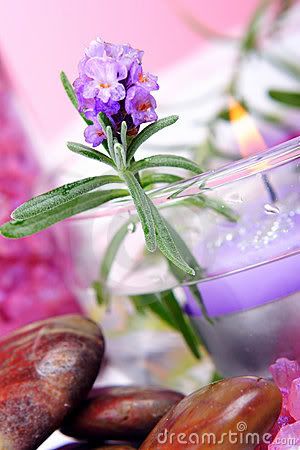
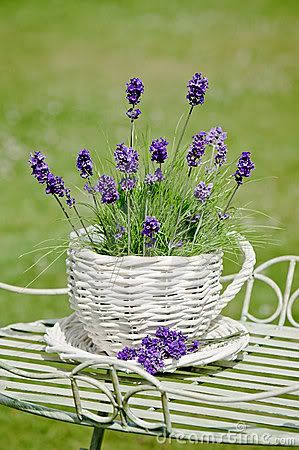


Hi V:
I hope you have a great day! I'm really thankful for meeting you. You are a really special woman :). Your friend: Alicia
Hi, Vanessa! Wishing you a Happy Mother's Day!
Love and blessings,
Your friend, Yvonne
APDG ~ Happy Mother's Day Deco Swap
APDG ~ Happy Mother's Day Deco Swap
This sums it all up
Hope your day is the best ever.
Hi, Vanessa!
EF Flowers #2 Lavender
I hope you like the pics that I have selected for you! Unfortunately I am allergic to lavender. Even so, I thought this would be a fun swap.
Lavandula (common name lavender) is a genus of 47 known species of flowering plants in the mint family, Lamiaceae. It is native to the Old World and is found from Cape Verde and the Canary Islands, Europe across to northern and eastern Africa, the Mediterranean, southwest Asia to southeast India. Many members of the genus are cultivated extensively in temperate climates as ornamental plants for garden and landscape use, for use as culinary herbs, and also commercially for the extraction of essential oils. The most widely cultivated species, Lavandula angustifolia, is often referred to as lavender, and there is a color named for the shade of the flowers of this species.
The genus includes annual or short-lived herbaceous perennial plants, and shrub-like perennials, subshrubs or small shrubs.
Leaf shape is diverse across the genus. They are simple in some commonly cultivated species; in other species they are pinnately toothed, or pinnate, sometimes multiple pinnate and dissected. In most species the leaves are covered in fine hairs or indumentum, which normally contain the essential oils.
Flowers are borne in whorls, held on spikes rising above the foliage, the spikes being branched in some species. Some species produce colored bracts at the apices. The flowers may be blue, violet or lilac in the wild species, occasionally blackish purple or yellowish. The calyx is tubular. The corolla is also tubular, usually with five lobes (the upper lip often cleft, and the lower lip has two clefts).
L. stoechas, L. pedunculata and L. dentata were known in Roman times. From the Middle Ages onwards, the European species were considered two separate groups or genera, Stoechas (L. stoechas, L. pedunculata, L. dentata) and Lavandula (L. spica and L. latifolia), until Linnaeus combined them. He only recognised five species in Species Plantarum (1753), L. multifida and L. dentata (Spain) and L. stoechas and L. spica from Southern Europe. L. pedunculata was included within L. stoechas.
By 1790, L. pinnata and L. carnosa were recognised. The latter was subsequently transferred to Anisochilus. By 1826 Frédéric Charles Jean Gingins de la Sarraz listed 12 species in three sections, and by 1848 eighteen species were known.
One of the first modern major classifications was that of Dorothy Chaytor in 1937 at Kew. The six sections she proposed for 28 species still left many intermediates that could not easily be assigned. Her sections included Stoechas, Spica, Subnudae, Pterostoechas, Chaetostachys and Dentatae. However all the major cultivated and commercial forms resided in the Stoechas and Spica sections. There were four species within Stoechas (Lavandula stoechas, L. dentata, L. viridis and L. pedunculata) while Spica had three (L. officinalis (now L. angustifolia), L. latifolia and L. lanata). She believed that the garden varieties were hybrids between true lavender L. angustifolia and spike lavender (L. latifolia).
More recently, work has been done by Upson and Andrews, and currently Lavandula is considered to have three subgenera. Subgenus Lavandula is mainly of woody shrubs with entire leaves. It contains the principal species grown as ornamental plants and for oils. They are found across the Mediterranean region to northeast Africa and western Arabia. Subgenus Fabricia consists of shrubs and herbs, and it has a wide distribution from the Atlantic to India. It contains some ornamental plants. Subgenus Sabaudia constitutes two species in the southwest Arabian peninsula and Eritrea, which are rather distinct from the other species, and are sometimes placed in their own genus Sabaudia.
In addition, there are numerous hybrids and cultivars in commercial and horticultural usage.
The English word lavender is generally thought to be derived from Old French lavandre, ultimately from the Latin lavare (to wash), referring to the use of infusions of the plants.[6] The botanic name Lavandula as used by Linnaeus is considered to be derived from this and other European vernacular names for the plants. However it is suggested that this explanation may be apocryphal, and that the name may actually be derived from Latin livere, "blueish".
The names widely used for some of the species, "English lavender", "French lavender" and "Spanish lavender" are all imprecisely applied. "English lavender" is commonly used for L. angustifolia, though some references say the proper term is "Old English Lavender". The name "French lavender" may be used to refer to either L. stoechas or to L. dentata. "Spanish lavender" may be used to refer to L. stoechas, L. lanata or L. dentata.
A bee on a lavender flower
The most common form in cultivation is the common or English lavender Lavandula angustifolia (formerly named L. officinalis). A wide range of cultivars can be found. Other commonly grown ornamental species are L. stoechas, L. dentata, and L. multifida (Egyptian lavender).
Because the cultivated forms are planted in gardens worldwide, they are occasionally found growing wild as garden escapes, well beyond their natural range. Commonly such adventitious establishment is apparently harmless at best, but in some cases Lavandula species have become invasive. For example, in Australia, Lavandula stoechas has become a cause for concern; it occurs widely throughout the continent, and has been declared a noxious weed in Victoria since 1920. It also is regarded as a weed in parts of Spain.
Lavenders flourish best in dry, well-drained, sandy or gravelly soils in full sun. All types need little or no fertilizer and good air circulation. In areas of high humidity, root rot due to fungus infection can be a problem. Organic mulches can trap moisture around the plants' bases, encouraging root rot. Gravelly materials such as crushed rocks give better results.
Lavender oil
Commercially, the plant is grown mainly for the production of essential oil of lavender. This has antiseptic and anti-inflammatory properties, and can be used as a natural mosquito repellent. These extracts are also used as fragrances for bath products.
English lavender (Lavandula angustifolia) yields an essential oil with sweet overtones, and can be used in balms, salves, perfumes, cosmetics, and topical applications. Lavandin, Lavandula × intermedia (also known as Dutch lavender), yields a similar essential oil, but with higher levels of terpenes including camphor, which add a sharper overtone to the fragrance.
The lavandins Lavandula × intermedia are a class of hybrids of L. angustifolia and L. latifolia. The lavandins are widely cultivated for commercial use, since their flowers tend to be bigger than those of English lavender and the plants tend to be easier to harvest, but lavandin oil is regarded by some to be of a lower quality than that of English lavender, with a perfume less sweet.
Lavender infused cupcakes
Lavender is grown as a condiment and used in salads and dressings. The flowers yield abundant nectar, from which bees make a high-quality honey. Monofloral honey is produced primarily around the Mediterranean, and is marketed worldwide as a premium product. Flowers can be candied and are sometimes used as cake decorations. It is also used to make "lavender sugar."
Lavender lends a floral and slightly sweet flavor to most dishes, and is sometimes paired with sheep's-milk and goat's-milk cheeses. Lavender flowers are occasionally blended with black, green, or herbal teas. Lavender flavors baked goods and desserts, pairing especially well with chocolate. In the United States, both lavender syrup and dried lavender buds are used to make lavender scones and marshmallows.
Though it has many other traditional uses in southern France, lavender is not used in traditional southern French cooking. It does not appear at all in the best-known compendium of Provençal cooking, J.-B. Reboul's Cuisinière Provençale. In the 1970s, a blend of herbs called herbes de Provence which usually includes lavender was invented by spice wholesalers, and lavender has more recently become popular in cooking.
For most cooking applications the dried buds, which are also referred to as flowers, are used. Only the buds contain the essential oil of lavender, from which the characteristic scent and flavor of lavender are derived. Lavender greens have a more subtle flavour that is compared to rosemary. The greens are used similarly to rosemary or combined with rosemary to flavor meat and vegetables in savory dishes. They can also be used to make a tea that is milder than teas made with the flowers.
Bunches of lavender for sale, intended to repel insects
Major constituents of lavender oil include linalool (26%) caryophyllene (8%). The essential oil was used in hospitals during World War I.
Lavender oil is under preliminary research for its possible effect in alleviating anxiety and sleep disturbances. High-quality clinical research generally has not been done to conclude if there are effects of lavender oil on anxiety.
Lavender products for sale at the San Francisco Farmers Market.
Flower spikes are used for dried flower arrangements. The fragrant, pale purple flowers and flower buds are used in potpourris. Lavender is also used extensively as herbal filler inside sachets used to freshen linens. Dried and sealed in pouches, lavender flowers are placed among stored items of clothing to give a fresh fragrance and to deter moths. Dried lavender flowers have become recently popular for wedding confetti. Lavender is also popular in scented waters and sachets.
Lavender greens can be used in craft or modeling projects, such as the creation of miniature topiary or trees.
The U.S. National Institutes of Health (NIH) states that lavender is considered likely safe in food amounts and possibly safe in medicinal amounts. NIH does not recommend the use of lavender while pregnant or breast-feeding because of lack of knowledge of its effects. It recommends caution if young boys use lavender oil because of possible hormonal effects leading to gynecomastia, and states that lavender may cause skin irritation and could be poisonous if consumed by mouth.
A 2005 review on lavender essential oil stated that, "Lavender is traditionally regarded as a 'safe' oil and, although it was recently reported that lavender oil, and its major constituent linalyl acetate, are toxic to human skin cells in vitro, contact dermatitis to lavender oil appears to occur at only a very low frequency."
A 2007 study examined the relationship between various fragrances and photosensitivity, stating that lavender is known "to elicit cutaneous photo-toxic reactions", but does not induce photohaemolysis.
The ancient Greeks called the lavender herb nardus, after the Syrian city of Naarda (possibly the modern town of Dohuk, Iraq). It was also commonly called nard. The species originally grown was L. stoechas.
Lavender was one of the holy herbs used in the biblical Temple to prepare the holy essence, and nard ('nerd' in Hebrew) is mentioned in the Song of Solomon (4,14)
nard and saffron, calamus and cinnamon, with every kind of incense tree, with myrrh and aloes, and all the finest spices.
During Roman times, flowers were sold for 100 denarii per pound, which was about the same as a month's wages for a farm laborer, or fifty haircuts from the local barber. Its late Latin name was lavandÄrius, from lavanda (things to be washed), from the verb lavÄre (to wash).
Different lavender cultivars grown at Snowshill, Cotswolds.
This is based on the classification of Upson and Andrews, 2004.
Lavender field in Carshalton, London Borough of Sutton.
Field in Hitchin, England
Lavender flower
Flower of cultivated lavender; Lavandula stoechas
Lavender garden, India
A field of lavender in France
A field of lavender on the edge of the London Borough of Sutton, England
Lavender and honeybees outside Aix-en-Provence, France
I hope you enjoyed!
Love and blessings,
Your friend, Yvonne
Hi, Vanessa! I know you are not my partner; but I thought you would enjoy this!
APDG ~ Happy Mother's Day Deco Swap
I hope you like the pics and gifs that I've chosen for you!
Enjoy! Happy Mother's Day!
Blessings,
Yvonne
APDG ~ Happy Mother's Day Deco Swap
Thank you for the wonderful envelope of goodies and thank you for Mother's day card :)